
Quick answer: 3D virtual house tours let prospective buyers explore a property remotely in genuine detail, often reducing wasted physical viewings and helping serious buyers shortlist properties more efficiently. For sellers and agents, they’ve become an increasingly standard part of an effective listing.
Contents
- What Does a 3D Virtual Tour Actually Offer?
- How Does It Benefit Buyers?
- How Does It Benefit Sellers and Agents?
- What Should You Check When Commissioning One?
- Frequently Asked Questions
Property listings have moved well beyond static photographs, and 3D virtual house tours now give prospective buyers a genuinely immersive way to explore a property before ever visiting in person. Understanding what these tours offer helps both buyers and sellers make better use of this technology.
Knowing the genuine benefits for each side of a transaction helps explain why virtual tours have become so widely adopted.
What Does a 3D Virtual Tour Actually Offer?
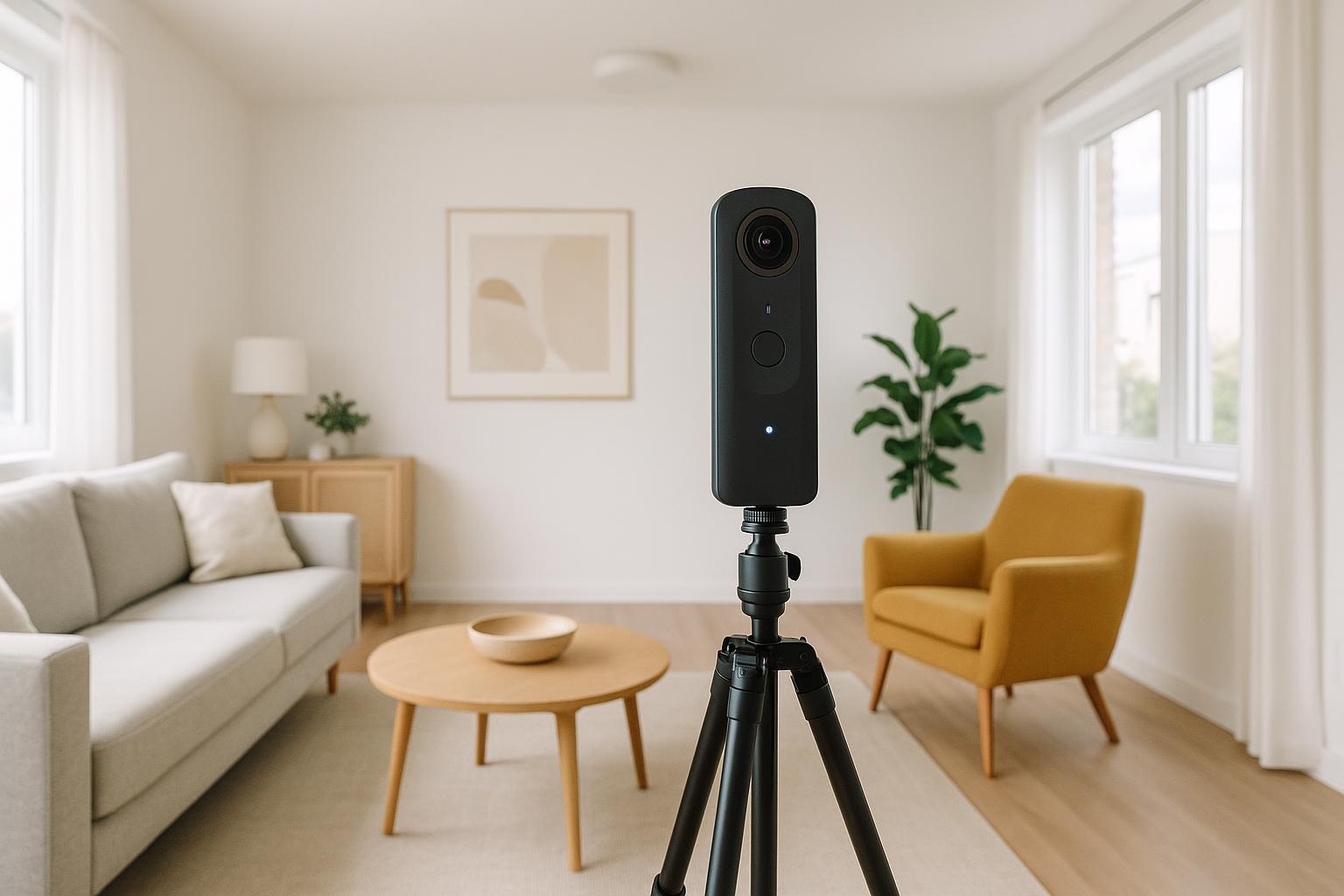
Using specialist camera technology, a 3D tour captures a property’s interior in genuine spatial detail, allowing viewers to navigate room by room as if physically walking through the space. This differs considerably from a simple video walkthrough, since viewers control their own pace and can look around freely within each room.
Many tours also include a dollhouse view, showing the entire property’s layout from above, which gives a genuinely useful sense of how rooms connect and flow together.
How Does It Benefit Buyers?
Buyers can genuinely narrow down their shortlist remotely, avoiding wasted physical viewings for properties that don’t actually suit their needs once seen in proper detail. This is particularly valuable for buyers relocating from a distance, or those with limited time to view multiple properties in person.
The ability to revisit a tour multiple times, discussing specific rooms or features with family, also supports more considered decision-making than a single brief physical viewing might allow.
How Does It Benefit Sellers and Agents?
Listings featuring 3D tours tend to attract more genuine engagement, since prospective buyers can explore in detail before deciding whether an in-person viewing is worthwhile. This often means the buyers who do book a physical viewing are more genuinely serious, saving time for sellers and agents alike.
For agents, offering this technology also reflects well on their overall service standard, which can be a genuine differentiator when competing for new listings.
What Should You Check When Commissioning One?
Confirming the specific technology and platform used affects both image quality and how the finished tour can be shared or embedded on listing sites. It’s also worth checking turnaround time, since a tour that takes too long to produce can delay getting a property to market.
Reviewing a provider’s previous tours gives a genuine sense of the finished quality you can expect for your own property.
Frequently Asked Questions
How long does it take to produce a 3D virtual tour?
This varies by property size, but many providers can capture and produce a finished tour within a few days. It’s worth confirming specific turnaround times directly with a provider when booking.
Do 3D tours replace the need for physical viewings entirely?
Not entirely, since most serious buyers still want to physically visit before making a final offer, but tours genuinely reduce unnecessary early-stage viewings. They work best as a complement to, rather than full replacement for, physical viewings.
Can 3D tours be used for commercial as well as residential properties?
Yes, the same technology works well for commercial spaces, offices and other property types, not just residential homes. Many providers offer this service across both markets.