
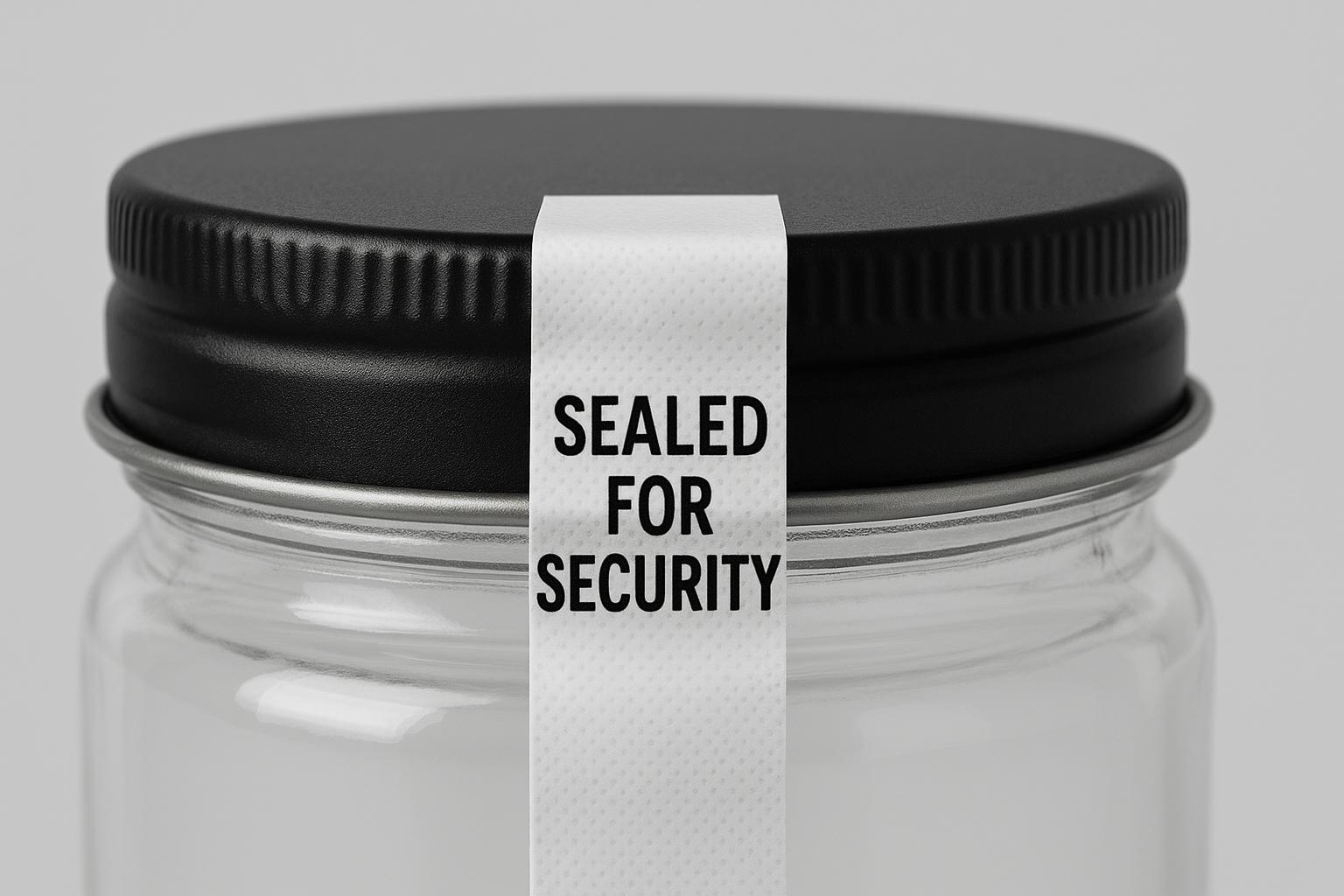
Quick answer: Anti tamper labels give customers visible confidence that a product hasn’t been opened or interfered with before purchase, an increasingly important feature across food, pharmaceutical and retail packaging. Choosing the right type and correctly applying them makes a genuine difference to how effective the protection actually is.
Contents
- How Do Anti Tamper Labels Actually Work?
- What Types of Tamper Evidence Exist?
- Which Products Genuinely Benefit Most?
- What Should You Check Before Choosing a Type?
- Frequently Asked Questions
Consumer trust depends heavily on product integrity, which is exactly why anti tamper labels have become such a standard feature across many product categories. Understanding how they actually work, and which type suits your product, helps you choose genuinely effective protection.
Knowing which products benefit most, and what to check before choosing a specific type, helps you make an informed decision.
How Do Anti Tamper Labels Actually Work?
These labels are designed to show clear, irreversible visual evidence if a seal has been broken, typically through a void pattern, message, or the label itself tearing apart if removal is attempted. This visible evidence gives customers immediate confidence that a product genuinely hasn’t been opened before they purchased it.
The specific mechanism varies by label type, but the underlying principle remains the same: making tampering visually obvious rather than easily concealed.
What Types of Tamper Evidence Exist?
Void labels leave a clear “VOID” pattern or message on both the surface and the product beneath once removed, making tampering immediately obvious. Destructible labels, by contrast, are designed to tear apart or fragment if removal is attempted, making them impossible to reapply cleanly.
Security seals and shrink bands offer alternative approaches, particularly suited to bottle caps or container closures where a label alone might not provide adequate coverage.
Which Products Genuinely Benefit Most?
Food, pharmaceuticals and cosmetics benefit particularly from tamper evidence, given the genuine safety implications if these products were altered before reaching the consumer. Electronics and high-value retail goods also commonly use tamper evidence, both to protect against product substitution and to support warranty and returns processes.
Even products without strict regulatory requirements can benefit from the consumer trust that visible tamper evidence provides.
What Should You Check Before Choosing a Type?
Confirming that your chosen label type genuinely suits your specific packaging material and shape is worth doing, since adhesion and effectiveness can vary considerably by surface. It’s also worth checking any specific regulatory requirements for your product category, since certain sectors have defined standards for what counts as adequate tamper evidence.
Testing a chosen label on your actual packaging before a full production run helps confirm it performs as expected in practice.
Frequently Asked Questions
Are anti tamper labels a legal requirement for all products?
This varies by product category, with some sectors like pharmaceuticals having specific regulatory requirements, while others use tamper evidence as a voluntary trust and security measure. It’s worth checking specific requirements for your particular product category.
Can anti tamper labels be customised with branding?
Yes, many providers offer custom branding alongside the tamper-evident function, allowing labels to serve both security and marketing purposes simultaneously. This is worth discussing when sourcing your specific labels.
Do anti tamper labels work on all packaging materials?
Effectiveness varies by material and surface texture, so it’s worth confirming a specific label type suits your actual packaging before committing to a full order. Testing on your genuine packaging is the most reliable way to confirm performance.