
Quick answer: A tennis practice wall gives players a genuinely convenient way to build consistency and technique without needing a partner or booked court time. Choosing the right surface and location makes a real difference to how useful the practice sessions actually are.
Contents
- What Genuine Benefits Does a Practice Wall Offer?
- What Makes a Good Practice Wall Surface?
- How Should You Structure Solo Practice Sessions?
- What Should You Consider Before Installing One?
- Frequently Asked Questions
Consistent practice matters enormously in tennis, and a tennis practice wall offers a genuinely convenient way to get repetitions in without relying on a partner’s availability. Understanding what makes a good wall, and how to use it effectively, helps you get real value from solo practice.
Knowing what to consider before installing one, whether at a club or home setting, helps ensure it genuinely serves its purpose.
What Genuine Benefits Does a Practice Wall Offer?
A practice wall allows genuinely unlimited repetitions of specific shots, building muscle memory and consistency in a way that’s harder to achieve during standard match play. It also removes the scheduling dependency of finding a practice partner, making regular, focused practice considerably more achievable.
The immediate, predictable ball return also allows players to focus specifically on their own technique without needing to react to an opponent’s varying shot quality.
What Makes a Good Practice Wall Surface?
A smooth, consistent surface produces predictable ball rebounds, which matters considerably for genuinely useful technical practice. Wall height and width also affect practice value, since a wall that’s too small limits the range of shots you can practise effectively.
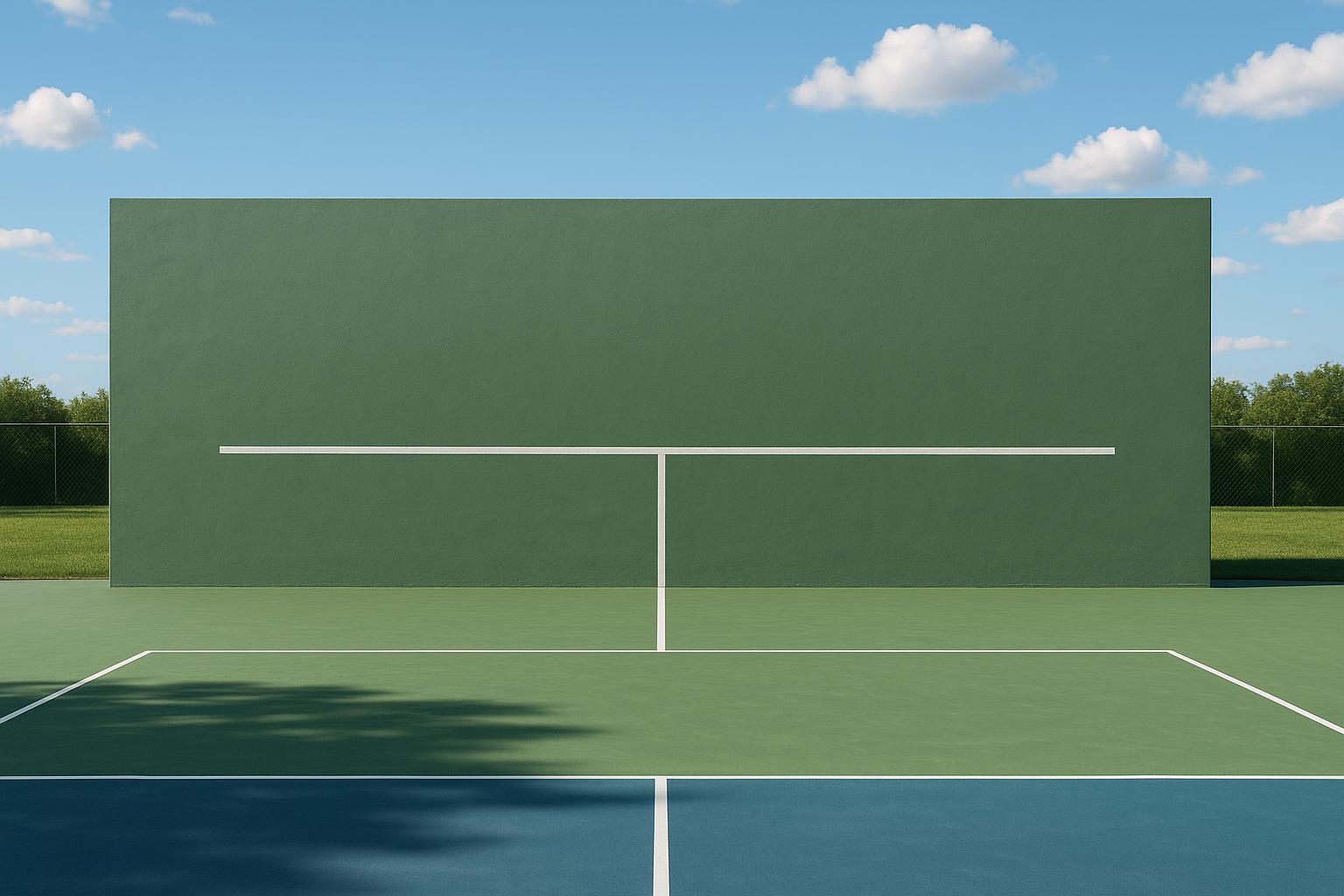
Some dedicated practice walls include marked lines simulating a net height and court boundaries, adding useful visual reference during solo sessions.
How Should You Structure Solo Practice Sessions?
Focusing on specific technical elements, like consistent contact point or follow-through, during dedicated wall sessions tends to produce more genuine improvement than simply hitting balls without a clear focus. Alternating between different shot types within a session also helps build more well-rounded technique rather than repeatedly grooving a single shot.
Setting specific, measurable goals for each session, like a target number of consecutive clean hits, helps maintain focus and track genuine progress over time.
What Should You Consider Before Installing One?
Confirming adequate space around the wall, allowing genuine room for footwork and shot preparation, is important for a practice wall to be actually useful. It’s also worth considering surface material carefully, since a poorly chosen surface can produce inconsistent or overly unpredictable rebounds that undermine useful practice.
For club or shared facility installations, considering noise and adjacent activity is also worth factoring into placement decisions.
Frequently Asked Questions
How much space is needed for an effective tennis practice wall?
Beyond the wall itself, genuine practice space requires enough clearance for full shot preparation and footwork, generally similar to the space needed for a standard court’s baseline area. Cramped space limits the usefulness of the practice.
Can practice walls help with all aspects of tennis technique?
They’re particularly effective for groundstroke consistency and contact point work, though they can’t replicate elements like opponent movement or genuine match tactics. Wall practice works best as a complement to, rather than replacement for, match play and coached sessions.
Is a practice wall suitable for beginners?
Yes, beginners can genuinely benefit from the predictable, repetitive nature of wall practice while building basic technique and confidence. It’s often less intimidating than practising against another player while still developing.