
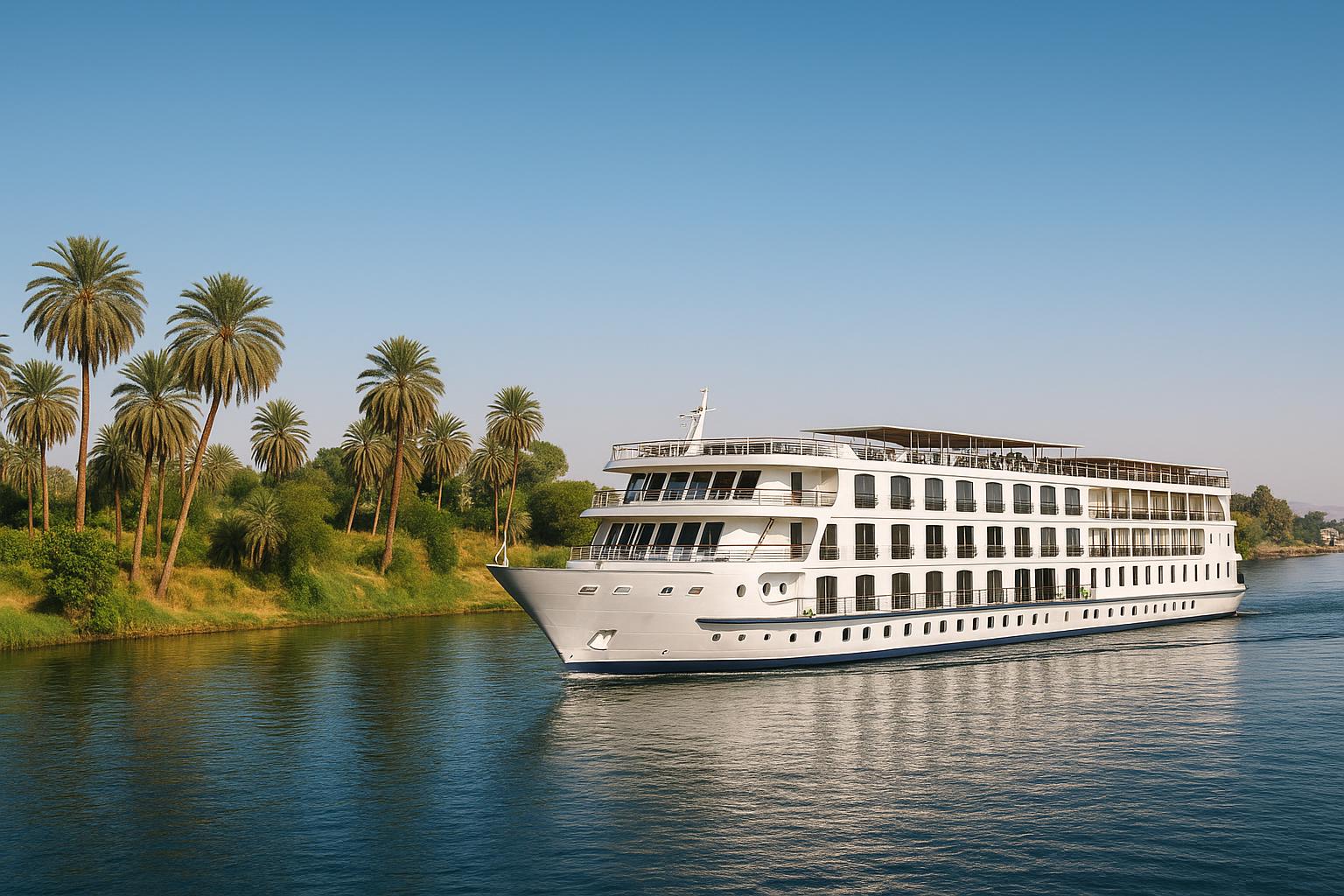
Quick answer: Nile cruise ships range from smaller, more intimate vessels to larger luxury ships, each offering a genuinely different onboard experience alongside the same core sightseeing route. Understanding what differs between ship types helps you choose one that suits your specific preferences.
Contents
- What Types of Vessels Operate on the Nile?
- How Does Ship Size Affect the Experience?
- What Onboard Facilities Should You Expect?
- What Should You Check Before Choosing a Ship?
- Frequently Asked Questions
Not all Nile cruise ships offer the same experience, and understanding the genuine differences between vessel types helps you choose one that suits your own travel style. From intimate smaller boats to larger luxury vessels, the onboard experience varies considerably.
Knowing what to look for in facilities and ship size helps you compare options beyond the standard sightseeing itinerary alone.
What Types of Vessels Operate on the Nile?
Standard Nile cruise ships typically carry anywhere from around 50 to over 100 passengers, offering multiple cabin categories and a range of onboard facilities. Smaller boutique vessels carry considerably fewer passengers, generally offering a more intimate, personalised experience at a correspondingly different price point.
Traditional feluccas, small traditional sailing boats, offer an entirely different, more basic experience, typically used for shorter excursions rather than multi-day cruises.
How Does Ship Size Affect the Experience?
Larger ships generally offer more extensive facilities, multiple dining options and entertainment, but can feel less personal given the greater number of passengers aboard. Smaller vessels tend to offer more attentive service and a quieter, more intimate atmosphere, though with correspondingly fewer facilities.
Neither option is inherently better, and the right choice genuinely depends on whether you prioritise facilities and social atmosphere or a quieter, more personalised experience.
What Onboard Facilities Should You Expect?
Most standard cruise ships include a restaurant, sun deck, and often a small pool, alongside comfortable cabins with river views. ABTA notes that comfortable, well-equipped vessels genuinely enhance the overall Nile cruise experience, particularly given Egypt’s warm climate.
Higher-end vessels may also include spa facilities, more varied dining options, and enhanced cabin categories, worth considering if these add genuine value to your specific trip.
What Should You Check Before Choosing a Ship?
Checking recent, genuine reviews specifically mentioning cleanliness, service quality and food standards gives a more honest picture than a ship’s own marketing materials. It’s also worth confirming exact cabin specifications, since river-view cabins and specific deck levels can affect both comfort and price.
Confirming the vessel’s typical passenger capacity against what you’re comfortable with also helps ensure the onboard atmosphere matches your expectations.
Frequently Asked Questions
Are smaller Nile cruise vessels more expensive than larger ships?
Not necessarily, since pricing depends more on service level and included inclusions than vessel size alone, though boutique smaller vessels can command a premium for their more personalised experience. Comparing quotes directly for comparable service levels gives the clearest picture.
Do all Nile cruise ships follow the same route?
Most standard cruises follow the Luxor to Aswan route covering the same core temple sites, though the specific ship and itinerary details can vary. It’s worth confirming the exact stops included with any specific vessel you’re considering.
Is it worth paying for a higher cabin category?
This depends on your priorities, since a better view or slightly larger cabin can meaningfully improve comfort on a multi-day cruise, though the core sightseeing experience remains the same regardless of cabin category. It’s worth weighing this against your overall budget.